The 2026 panels and panel leaders (scientific committee)
Europe is facing converging crises in security, economics, and the environment. These crises are compounded by geopolitical instability and the need to balance green and digital transitions with social resilience.
On the political agenda, the discourse has narrowed with a focus on competitiveness, defense, energy security and resource supply chains. Climate and energy efficiency are no longer on top of the political agenda at this time.
Yet, we know it is easy to argue that energy efficiency is a key component in managing all these converging crises. Without making efficiency a key tool to meet the challenges we face, we are making the response slower, harder and more expensive for everyone. By neglecting improved energy efficiency we all risk coming out as losers.
Energy efficiency technologies and applications are constantly getting cheaper and more powerful, every day, month and year. With the right policies and institutional framework, efficiency can make a significant difference.
This year’s theme Efficiency: powering on is rooted in our deep trust in the power of energy efficiency as a force for the benefit of citizens, our societies, the economy, the climate and the environment.
Our nine panels for the 2026 edition
Those who have been to a Summer Study before will recognise the panels. We offer a number of cross-sectoral panels on understanding consumption and behaviour, policy and monitoring & evaluation as well as a number of panels with a more sector-based focus. Here we offer panels on cities and local communities, transportation and mobility, buildings, products and industrial decarbonisation.
Panel 1. Dynamics of people: consumption & empowerment
Panel 2. Future and innovative policies
Panel 3. Policy, finance and governance
Panel 4. Monitoring and evaluation in times of crises
Panel 5. Sustainable communities
Panel 6. Energy-efficient, climate-neutral and socially just mobility and transport
Panel 7. Policies and programmes for better buildings
Panel 8. Products, systems and technologies for efficient and decarbonised buildings
Panel 9. Energy efficiency and sustainability of industry
Panel 1. Dynamics of people: consumption & empowerment


Panel leaders: Erica Löfström, NTNU – Norwegian University of Science and Technology, Norway, & Sabine Preuß, Fraunhofer Institute for Systems and Innovation Research, Germany.
Humans play a key role in achieving climate targets. This panel focuses on people’s current and potential role in the energy transition, including their perceptions and behaviours. Contributions may focus on interactions—between people, within and between groups (e.g., energy communities, companies and businesses, associations), with (changing) infrastructure, with the environment, and with policies.
We welcome work that explores people as change agents, protesters, co-designers, activists, and drivers of the energy transition, both as individuals and at a systemic level, including their role as citizens in democracies. Considering current geopolitical insecurities, this panel also invites research on resilience and preparedness in relation to energy, energy security, and related topics. Furthermore, we welcome research on broader concepts, such as intermediaries between top-down and bottom-up processes, and the role of emotions in energy-efficient behaviour or change processes of any kind. In light of the current political atmosphere in the U.S., we encourage submissions focusing on diversity and on research around a just transition that considers energy justice, energy poverty and the people most affected — reflecting the EU’s target to “leave no one behind”.
Read more about Panel 1 and its panel leaders.
Panel 2. Future and innovative policies


Panel leaders: Heike Brugger, IREES, Institute for Resource Efficiency and Energy Strategies, Germany, & Joanne Wade, Independent NED and Advisor, United Kingdom.
The roles of energy efficiency, end-use flexibility and electrification in the decarbonisation of our energy system remain contested. How should energy demand policies evolve to respond to the pace of change and secure the role and interests of energy users in the future system? What new policy ideas are needed to ensure an equitable transition to net zero that offers benefits to all? We welcome innovative ideas, both conceptual and based on policy experience.
Read more about Panel 2 and its panel leaders.
Panel 3. Policy, finance and governance


Panel leaders: Tomislav Novosel, IEECP, Croatia, & Lucinda Maclagan, Independent consultant, Belgium.
This panel examines how effective policy design, robust governance, and innovative financing can drive Europe’s energy transition in a time of tight public budgets and increasing social demands. It invites insights, experiences, and analysis on how to make energy efficiency policies more coherent, financeable, and impactful — ensuring that Europe stays on course to meet its energy and climate goals.
Read more about Panel 3 and its panel leaders.
Panel 4. Monitoring, evaluation & impact assessment


Panel leaders: Niklas Reinfandt, Fraunhofer Institute for Systems and Innovation Research, Germany, & Amandine Gal, Econoler, Switzerland.
What new information do we need from monitoring, evaluation, and impact assessment during the new realities of current multiple crises? For example, how can we demonstrate, attribute, and value the benefits (and costs) of resilience and adapting our lives and lifestyles?
We are interested in why we can sometimes adapt quickly to increasingly uncertain contexts and how this can be sustained in the long term.
Read more about Panel 4 and its panel leaders.
Panel 5. Sustainable communities


Panel leaders: Stew Horne, Energy Saving Trust, United Kingdom, & Renee Kooger, TNO Energy Transition Studies, The Netherlands.
Place-based interventions are approaches that work with place-specific constraints and opportunities by focusing on collaborative efforts between different actors related to a community. Whether these are rural or urban areas, placed based approaches are effective in supporting sustainable and resilient communities. Building on place-based strategies “energy communities” can enable collective and citizen-driven energy actions. Shared ownership of or benefit from energy resources can transform the resilience and affordability of electricity whist accelerating the transition
Read more about Panel 5 and its panel leaders.
Panel 6. Energy-efficient, climate-neutral and socially just mobility and transport


Panel leaders: Nelly Unger, Öko-Institut, Germany, & James Dixon, University of Strathclyde, United Kingdom.
The panel welcomes submissions on the topics of transport, mobility, energy, emissions and just transitions, especially those aligned with the three core themes of: a) the role of place in transport and mobility transitions, b) transport policies for a changing world, and c) balancing environmental goals with social justice.
- How do place-specific geographies, infrastructures and social contexts shape transport and mobility transitions, and to what extent can lessons be transferred across countries, regions, cities and rural areas?
- In an era of acute global disruption, what (innovative) policies are needed to guide the development of robust and resilient transport systems fit for the future?
- What is needed to ensure that the transition to climate-neutral transport systems is socially just? How do policies differentially impact vulnerable users, and which approaches best guarantee access to services, goods and opportunities for the most people?
Read more about Panel 6 and its panel leaders.
Panel 7. Policies and programmes for buildings
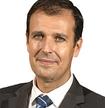

Panel leaders: Rui Fragoso, ADENE, Portugal, & Malte Bei der Wieden, Öko-Institut, Germany.
Buildings stand at the crossroads of environmental, social and economic policy. Energy efficiency and renewable energies in buildings are key to achieving climate goals, strengthening energy security, boosting competitiveness, and improving the quality of life. Recent EU policies such as the Renovation Wave and the revised EPBD and EED aim to accelerate this transformation. But with 2030 approaching, we must ask:
- Are we already on the right pathway to transforming Europe’s buildings?
- Are we ready for the energy, climate and geopolitical challenges ahead?
We invite contributions that explore:
- How can the building stock become sustainable, affordable and resilient?
- And how can we ensure that no one is left behind in this transition?
Read more about Panel 7 and its panel leaders.
Panel 8. Products, systems and technologies for efficient and decarbonised buildings


Panel leaders: Åsa Wahlström, CIT Renergy, Sweden, & Antoine Durand, Fraunhofer Institute for Systems and Innovation Research, Germany.
This panel aims to combine the focus on buildings technologies and systems with a focus on appliances, products and ICT. Thus, the panel will examine how products, systems, services, and buildings can reduce energy demand, support climate‑neutrality, with emphasis on energy efficiency, sufficiency, renewables, and the circular economy across their full life cycle. Abstracts are invited on consumer behaviour, product policies (also beyond efficiency), the transition from Ecodesign to ESPR, and the role of Artificial Intelligence in energy efficiency and policies. Contributions may also address interaction of the building to the energy system such as building flexibility for decarbonisation, including smart readiness, peak load reduction, demand‑side flexibility, on‑site energy with storage, and conversion to low‑carbon heating and cooling. Furthermore, we address business models and digital twins that foster sustainability.
Read more about Panel 8 and its panel leaders.
Panel 9. Energy efficiency and sustainability of industry


Panel leaders: Ivana Rogulj, IEECP, The Netherlands, & Manuel Casquiço, ADENE, Portugal.
Energy efficiency stands at the centre of sustainable industrial development, serving as a key lever for reducing energy consumption, operational costs, and environmental impacts. By adopting advanced technologies, optimising processes, and embracing resource efficiency, industries can significantly lower their carbon emissions while enhancing competitiveness. As sustainability becomes a strategic priority, energy efficiency measures are not only improving environmental outcomes but also driving innovation and long-term business resilience. To help achieving these goals, AI and IT technologies are playing a pivotal role in accelerating industrial decarbonisation by enabling smarter energy management, predictive maintenance, and process optimisation. Using existing methodologies, together with emerging technologies can also help SMEs to improve energy efficiency and decarbonise. SMEs often lack capital and expertise, making it hard to adopt new technologies. Targeted financial incentives, technical help, and policy support can enable them to cut emissions, boost competitiveness, and contribute to climate goals.
Read more about Panel 9 and its panel leaders.