Panel 4. Monitoring, evaluation & impact assessment
What new information do we need from monitoring, evaluation, and impact assessment during the new realities of current multiple crises? For example, how can we demonstrate, attribute, and value the benefits (and costs) of resilience and adapting our lives and lifestyles?
We are interested in why we can sometimes adapt quickly to increasingly uncertain contexts and how this can be sustained in the long term.
The changes we need require learning from the past, keeping track of the present and planning for the future – all of which need to be informed by monitoring, evaluation, and impact assessment. Therefore, panel 4 wants to discuss best practices, the latest advancement and continuing challenges in monitoring, evaluation and impact assessment.
We want to explore what new information we need from monitoring, evaluation and impact assessment during the new realities created by multiple crises—for example, how to demonstrate and attribute the benefits (and costs) of resilience and adapting our lives and lifestyles. This includes drawing lessons from policies implemented during crises such as Covid-19 or the war initiated by Russia in Ukraine. In times of uncertainty, what are high-quality and transparent methodological approaches, and how can we carry out robust analysis when data collection may be difficult? How can ex-ante and ex-post assessments be used effectively, and how do distributional effects and competitiveness factor in?
We are interested in why we sometimes can adapt quickly into increasingly uncertain contexts and how this can be sustained in the long-term. In these contexts, we are also interested in how the principles of ‘efficiency first’ and ‘energy sufficiency’ are considered in evaluations and impact assessments. This includes how they are accounting for demand reduction and/or demand switching with a focus on the applicability and needs in a crisis; how multiple benefits are considered and what the possible trade-offs with non-energy impacts are; and how these can influence decisions, including how energy efficiency policies can promote sustainability transitions.
Lastly, we’re looking for examples of new methods, framing, and uses of monitoring, evaluation and impact assessment that have increased value to key stakeholders and have proven successful in unlocking investment in energy efficiency and adaptation to difficult and quickly changing situations. We also consider questions concerning green finance, particularly what investors and financers need to know about energy efficiency and how to provide that knowledge through monitoring, evaluation and impact assessment. This includes advancements in technology and data, for example the use of big data. We also particularly encourage insights into open and transparent monitoring, evaluation and impact assessment processes.
In particular, we are looking for abstracts that address these key points:
- Is monitoring delivering a comprehensive and useful data set on the impacts of energy efficiency investments?
- What are best practices in evaluation and impact assessment that give an accurate and useful picture of energy efficiency impacts? Are there differences in approaches when they have involved policies implemented during times of crises?
- How can evaluation practices inform ex-ante assessments and improve policy design and decisions to promote energy efficiency in times of crises? What are the long-term impacts of emergency energy saving measures?
- What new information do we need from monitoring, to demonstrate the (multiple) benefits and costs of resilience and adapting our lives and lifestyles?
- How can the impact of energy efficiency on competitiveness be taken into account in monitoring, evaluation, and impact assessment?
- What new methods, such as new digitalized approaches, can provide transparency and increase value for key stakeholders?
Panel leaders

Niklas Reinfandt, Fraunhofer Institute for Systems and Innovation Research, Germany
Since March 2022, Dr. Niklas Reinfandt has been working as a researcher and project manager in the Business Unit Energy Policy of the Department of Energy Policy and Energy Markets. Since April 2025, he has been Coordinator of the Business Unit Energy Policy.
His research areas include evaluation, design and analysis of various energy policy instruments and measures with a particular focus on energy efficiency. From May 2022 to August 2025, he was also a scientific advisor to the German Council of Experts on Climate Change, which focuses on greenhouse gas emissions trends and reaching the emission reduction targets in Germany.
Niklas Reinfandt studied chemistry at the Karlsruhe Institute of Technology (KIT) with a focus on inorganic chemistry, polymer chemistry and transient absorption spectroscopy. From 2018 to 2022 he was a research fellow in the group of Prof. Dr. P. Roesky (KIT). He received his doctoral degree in 2021 with his work focusing on the organometallic chemistry of rare earth metals.
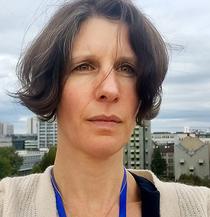
Amandine Gal, Econoler, Switzerland
Amandine Gal is a principal advisor at Econoler with over 20 years of international experience in energy efficiency and sustainable development. She has worked on projects worldwide, supporting governments, development institutions, and private sector actors in advancing clean energy and climate solutions. Her expertise spans program design, evaluation, policy advisory, and capacity building, with a strong focus on delivering practical strategies that drive impact and support global climate objectives.