Panel 3. Policy, finance and governance
This panel examines how effective policy design, robust governance, and innovative financing can drive Europe’s energy transition in a time of tight public budgets and increasing social demands. It invites insights, experiences, and analysis on how to make energy efficiency policies more coherent, financeable, and impactful — ensuring that Europe stays on course to meet its energy and climate goals.
Public authorities across Europe are under growing pressure to deliver on ambitious climate and energy commitments while facing fiscal constraints and competing priorities. Despite comprehensive European legislation, the indicators show we are not yet on track to meet our 2030 and 2050 goals. This situation highlights the urgent need for policies that are not only well designed but also well governed, adequately financed, and effectively implemented.
This panel invites papers and discussions that explore how governance and policy can evolve to close the implementation gap. How can policy design become more adaptive and results-oriented? What governance arrangements enable long-term commitment, transparency, and accountability? How can financial and fiscal instruments — from green bonds to energy efficiency funds and performance-based incentives — scale up investment and ensure fair access to benefits?
Key themes:
- Stronger policy and governance frameworks that turn legislation into effective implementation.
- Financing solutions and market mechanisms that mobilise both public and private investment in energy efficiency.
- Integration and coherence vertically (between the EU, national, and local levels) and horizontally (across sectors) to align ambition, action, and accountability.
We particularly welcome contributions that combine practical experience with analytical insight: case studies of successful (or failed) policy measures, evaluations of governance models, and examples of financing schemes that have helped overcome market and institutional barriers.
By bringing together researchers, policymakers, financiers, and practitioners, this panel aims to identify what works — and what doesn’t — in making energy efficiency policy credible, investable, and effective. The goal is to generate fresh thinking on how Europe can build governance and finance systems strong enough to deliver the deep energy savings we need.
Panel leaders
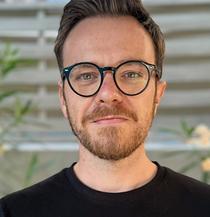
Tomislav Novosel, IEECP, Croatia
Dr.sc. Tomislav Novosel is a mechanical engineer and a senior expert at IEECP. He has obtained his PhD in mechanical engineering at the University of Zagreb in 2023. His academic background if mostly focused on energy planning and the integration of heating, cooling and the power sector.
Before joining IEECP, Tomislav has worked as a research assistant at the University of Zagreb and later on as an Expert Advisor at a regional energy agency in Zagreb. Throughout his carrier, he has worked on the preparation and implementation of several EU funded projects from programmes such as Horizon 2020, Horizon Europe, Interreg, EUKI and so on, on the topics of climate change mitigation, adaptation and sustainable development in general. Additionally, he is an experienced evaluator of Horizon Europe projects.
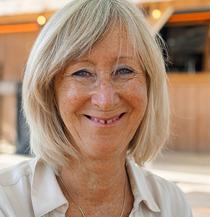
Lucinda Maclagan, Independent consultant, Belgium
Lucinda Maclagan has dedicated her career to advancing energy efficiency, working for the Netherlands Enterprise Agency (RVO) and its predecessors from 1989 to 2026. Throughout her tenure, she has played a key role in shaping national and international energy policies, notably through her active involvement with the IEA—both as Operating Agent and as the Netherlands’ representative in several Working Parties. A former member of the eceee Board, Lucinda also spent time on secondment to the European Commission’s Energy Efficiency Unit during the inception of the Energy Efficiency Directive. For the past 15 years, she successfully led the Concerted Action EED, stepping down earlier this year to support new leadership. With over 25 years of experience as a skilled facilitator and moderator, Lucinda continues to contribute her expertise to European energy initiatives, promoting collaboration and innovation in the pursuit of a more energy-efficient future.