Panel 5. Sustainable and resilient communities
Place-based interventions are approaches that work with place-specific constraints and opportunities by focusing on collaborative efforts between different actors related to a community. Whether these are rural or urban areas, placed based approaches are effective in supporting sustainable and resilient communities. Building on place-based strategies “energy communities” can enable collective and citizen-driven energy actions. Shared ownership of or benefit from energy resources can transform the resilience and affordability of electricity whist accelerating the transition
Increasingly there is a focus on urban areas and the actions of cities and mayors. Already almost half of the world’s population (45%) lives in cities, in Europe it is 60-65%. This is expected to increase further, with about 70% of both the world’s inhabitants and Europe’s living in cities in 2050. The large and increasing number of people living in cities requires that these places become resilient to (future) challenges that cities face. We use a broad definition of ‘resilience’, where we consider human behaviour and social aspects as key determining elements for a resilient city. Cities hold great opportunities for simultaneous climate protection, energy and resource efficiency, social cohesion and sustainable behaviour e.g. and economic development, employment, and wealth generation. Although cities worldwide only occupy 2% of the land area, they consume 75% of global energy and generate 80% of the greenhouse gas emissions. Thus, sustainable development of cities, facilitating and fostering sustainable behaviour of its inhabitants and multidisciplinary planning are challenges of key importance.
In order to be able to create and resilient, sustainable communities, it is vitally important to identify, understand and act on the drivers and barriers of sustainable behaviour from relevant stakeholder groups. This covers a broad range of issues whether it is different residents’ groups determining how they interact with each other, or how they heat their homes, or (local) government, or private actors implementing policy and providing goods and services. Civil society, local governments, local business life and other stakeholders need to work closely together on making cities more resilient and sustainable.
It is increasing key to have cooling strategies, both passive and active, in communities as the effects of climate change and warmer summers have seen extreme heat waves across the world including all parts of Europe. Community responses to both the recent impacts of COVID-19 and the energy crisis may also offer insights into future resilience strategies.
Smart technologies can also provide an important contribution to the sustainable development of communities, offering new interdisciplinary opportunities to improve services while reducing energy consumption and emissions and implementing new roles along the energy value chain, where traditional business models are rapidly becoming outdated, with more demanding consumers and sustainability policies
Panel 5 welcomes contributions that are dedicated to best practices, and concrete examples that have worked in increasing the resilience of communities. It is important that contributions have surpassed the theoretical stage, panel 5 would like to see research tested in practice. We specifically welcome contributions focused on understanding, facilitating and fostering sustainable behaviour of relevant stakeholders, e.g. citizens, (local) governments and private sector actors (e.g. local businesses and service providers) and sustainable business parks.
Some relevant topics include:
- Fostering sustainable and inclusive local (energy) communities and what is needed for them to have a substantial sustainable and/or social impact.
- What is needed for residents in communities to adopt sustainable measures in their home, ranging from sustainable installations like solar panels and heat pumps, to insulation. Specific attention to how to adopt cooling measures is also encouraged.
- How to increase community building in general, increasing trust among neighbours, foster local initiatives e.g. time banks, and skill sharing networks, public space activations.
- Understanding the needs and involving of the un-usual suspects, particular specific challenges of urban or rural areas, hard to reach target groups, decrease polarization between groups.
Contributions may also focus on policy design, urban design and planning, development and assessment of resilient cities.
Some relevant topics are:
- Identifying and tackling large contributors (e.g. practices, production, behaviour) to unsustainable cities. On what practises should policy makers focus, what stakeholders should come together?
- How to realize and combine enough, affordable and sustainable housing for an increasing number of citizens?
- Reflection on concepts like the ’15 minute’ cities, what are lessons learned, to what extent are these successful and
- Examples how to tackle grid congestion
- How can we make our cities climate adaptive, e.g. how to keep them cool (and what would be an effective mix of cooling measures) prevent droughts and floods
- How to prepare cities for energy and climate related calamities like power outages, no access to gas due to e.g. geopolitical tension.
- comparisons of smart and sustainable cities (case studies, replication, and transfer across cities and communities).
- New insights and use of ICT (smart meters, smart appliances, monitoring and control systems, etc.) for energy management at community and city district levels and their potential for energy and cost savings.
- New insights on electrification, integration of renewable generation, and demand flexibility options (including demand response and energy storage) to achieve net-zero energy communities.
Contributions may also focus on urban planning issues or the implementation of local actions, as well as on cross-cutting aspects linking several aspects related to sustainable communities and city districts. Some relevant topics are:
- Regeneration of urban space, design options for greening urban environments and urban challenges related to energy and climate.
- Local actions (experiments, projects, and demonstrations) in cities and rural areas and their role in learning and upscaling.
- Local governance structures, urban governance strategies, policies, and financing for community solutions and cooperation to achieve low carbon energy transitions at the community and/or urban area level.
Panel leaders
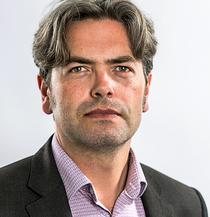
Stew Horne, Energy Saving Trust, United Kingdom
Stew Horne is Group Head of Sector Intelligence and External Affairs at Energy Saving Trust’s and leads their Sector Intelligence centre of excellence, comprising: insight and evaluation, European and international work, policy, PR and events. A key part of Stew’s role is increasing Energy Saving Trust’ influence and visibility by using its insight and impact across a broad range of sectors linked by the climate emergency.
Before joining Energy Saving Trust Stew led Citizens Advice’s Energy Infrastructure team representing the needs of British Consumers and as part of this role represented European consumers on the ENTSO-E advisory board for BEUC (The European consumers’ association). He’s also worked in energy vulnerability at Britain’s energy regulator Ofgem and had several consumer policy focussed roles elsewhere in the UK civil service. Stew is also a member of National Grid Transmission’s Independent Stakeholder and a Consumer Affairs advisor to the Bar Standards Board in the UK.

Renee Kooger, TNO Energy Transition Studies, The Netherlands
Hi! I'm Renee, and I work at TNO in a department focused on accelerating the energy transition. I'm a behavioral scientist. In my work, I'm particulary involved in identifying the drivers and barriers that key stakeholders experience when accelerating the heating and cooling transition. Think, for example, of what different groups of residents need when switching to sustainable housing, what municipalities need to make the energy transition a success, or how businesses on a business park can collaborate to establish a heating network. We translate the results of our research into practical action perspectives for organizations such as (local) governments, heating companies, and housing associations. I believe it's important that my work has a real-world impact. I'm committed to this every day.