Panel 8. Products, systems and technologies for efficient and decarbonised buildings
This panel aims to combine the focus on buildings technologies and systems with a focus on appliances, products and ICT. The panel covers products, systems, services, and technologies (including whole buildings) and looks how they can reduce energy demand and contribute to climate‑neutrality, while also offering indoor comfort and convenient living.
Energy efficiency, energy sufficiency, the use of renewable energies as well as circular economy will be the scope of the topics. Furthermore, the discussions will cover not only on the use phase of products and technologies but also on their entire life cycle.
Since the last Summer Study, topics such as Ecodesign for Sustainable Products Regulation (ESPR), circular economy, critical raw materials, and artificial intelligence have gained significant prominence in relation to products.
For products and appliances, we invite abstracts that address, among others, the following questions:
- Consumer behaviour: How can consumers be guided towards purchasing sustainable appliances and using them in a sustainable way?
- Beyond efficiency: How can product policies deliver additional environmental and economic benefits?
- Ecodesign and ESPR: What are the main impacts of the transition from Ecodesign to ESPR for energy‑related products? Is energy efficiency at risk of being sidelined in the new framework or are energy efficiency requirements even more relevant as they deliver costs savings for the end-users? What challenges arise in implementing ESPR? Are there enough reliable data and methodologies to develop ESPR implementing acts?
- Artificial intelligence: Do we have still a user on board? Should AI be integrated into energy efficiency and product policies and if so, how? Will AI deliver savings or increase the energy consumption and the overall environmental impact?
Furthermore, we welcome contributions that considers the building´s function and possible flexibility regarding decarbonisation. Below are examples of such topics:
- Digital solutions that will improve the buildings SRI (the smart readiness of buildings) in their capability to optimize energy efficiency and overall in-use performance, adapt their operation to the needs of the occupants and adapt to signals from the grid.
- Products or systems for peak load levelling, i.e. that can reduce the building´s energy need at peak loads.
- Solutions that increase capacity for demand-side flexibility and involvement of the users.
- Solutions for increased flexibility with at-site-energy-production in combination with energy storage.
- Switch to low-carbon energy sources or electricity for space heating and cooling in existing buildings.
In general, following topics are also of interest:
- Business-models fostering energy efficiency and sustainability.
- Use of digital twins in buildings, building technologies, and appliances to improve decarbonisation and sustainability.
Panel leaders

Åsa Wahlström, CIT Renergy, Sweden
Åsa Wahlström works as Sector Manager within Built Environment at the consultant company CIT Renergy. She also works as adjunct professor in Building Services at Lunds University.
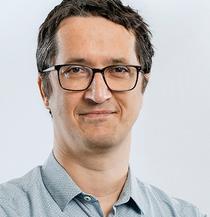
Antoine Durand, Fraunhofer Institute for Systems and Innovation Research, Germany
Antoine Durand is project manager at the Fraunhofer Institute for Systems and Innovation Research ISI and responsible for the cross-cutting topic ‘global energy transition’. He has been working at the Department of Energy Technologies and Energy Systems in the business unit Energy Efficiency since 2017. His research areas include qualitative and quantitative assessment of technologies for improving energy efficiency in residential, tertiary and industry sectors, with a strong focus on product regulations. His projects are mainly at EU level or in the context of development cooperation.
After studying mechanical engineering at the University of Karlsruhe (TH) and at the ENSHMG (INPG) in Grenoble, he worked as an application engineer and technical project manager in the automotive sector in Germany and Japan. From 2009 to 2013 he was a scientific researcher at the Wuppertal Institute for Climate, Environment and Energy in the field of energy efficiency and subsequently consultant for the German Cooperation for International Cooperation (GIZ) in Senegal.