Panel 7. Policies and programmes for buildings
The buildings sector is at the heart of Europe’s energy transition, accounting for around 40% of energy consumption and more than one third of greenhouse gas emissions. Its transformation towards energy efficiency and renewable energies is essential to meet climate goals, protect consumers from energy crises, strengthen industrial competitiveness, ensure social justice, and improve citizens’ quality of life.
Over the past five years, the European Union has launched ambitious policies such as the Renovation Wave and the revised Energy Performance of Buildings Directive (EPBD) and Energy Efficiency Directive (EED), aiming for ambitious energy efficiency and deep decarbonisation of the building stock. But as we approach 2030, with increasingly demanding climate and efficiency targets, it is time to reflect:
- Are we already on the right pathway to transforming Europe’s buildings?
- Are policies accelerating energy-efficient renovation and sustainable construction?
- Are we preparing our buildings to withstand energy, climate and geopolitical crises?
Since the last Summer Study in 2024, the political landscape has shifted: Growing societal polarisation is putting increasing pressure on policies for energy efficient and decarbonized buildings. Policymakers now find themselves in the position of having to defend achievements. This political backlash is accompanied by other challenges: the ongoing war in Ukraine, less stable transatlantic cooperation, energy insecurity, housing pressure and affordability issues, and politically sensitive debates – for instance, around ETS2. In these times, buildings become a strategic axis for integrated and effective policymaking, bridging environmental, social, economic and geopolitical dimensions – and placing new demands on the design of public policy.
This panel invites critical analysis of the policies and programmes shaping the buildings sector, with a particular focus on the national implementation of the EPBD by May 2026. We aim to assess whether these policies are triggering a genuine transformation towards a building stock which is energy-efficient, renewable, resilient and people-centred.
Therefore, we welcome contributions to the panel that focus on one or several of the following questions:
- How effective has recent EU legislation been in accelerating the transformation towards an energy-efficient and zero-emission building-stock?
- What are examples of good practices, failures and gaps in current policies?
- Which innovative approaches and international perspectives should be integrated into European policy mixes?
- How are different Member States defining optimal energy efficiency levels, and how do renovation strategies interact with renewable heating solutions?
- How can embodied carbon considerations be integrated into decarbonisation pathways and emissions targets?
- How can improved data collection, accessibility and digitalisation enhance the design, implementation and monitoring of building policies?
- How can Member States asses needs, provide structures and actively renovate their public buildings in order to reach efficiency targets defined in EED and EPBD?
- How can citizens, local governments and the private sector be mobilised for investments into future-proof buildings?
- What policies are being developed to support buildings that are not only energy-efficient, but also healthy, adaptable and resilient for occupants?
- How can financial and regulatory instruments – such as the Social Climate Fund, the European Competitiveness Fund or national schemes – be leveraged to scale up renovation and construction efforts?
- What policy responses are emerging to address housing pressure and affordability issues, and how do they intersect with energy efficiency and climate goals?
Panel leaders
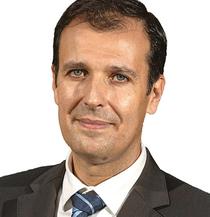
Rui Fragoso, ADENE – Agência para a Energia, Portugal
Rui Fragoso graduated in Civil Engineering and obtained a post graduate degree in Planning and Sustainable Construction and as well as in Building Acoustics. In 2010 he joined ADENE – Portuguese Energy Agency, and between 2012 and 2018 he was the Head of the Buildings Department, responsible for managing the EPC scheme and its implementation. Designed and implemented the on-stop-shop Portal casA+ and provide technical assistance to the implementation of financial instruments for building renovation.
Between 2020 and 2022 Rui Fragoso was Head of Projects following and managing ADENE's participation in several European projects. He is currently responsible for the “Buildings and Resources Efficiency” department responsible for managing the SCE (Energy Performance Certificates scheme) and the ECO.AP program (Resource Efficiency Program in Public Administration). He is also a member of the Monitoring Group for the Long-Term Strategy for the Renovation of Buildings, former chair of the buildings group of the European Network of Energy Agencies (EnR) (2014-2024) and Central-Team Manager of the Concerted Action for the EPBD directive (CA-EPBD) with the theme “Renovation Passports and Energy Certificates”.

Malte Bei der Wieden, Öko-Institut, Institute for Applied Ecology, Germany
Malte Bei der Wieden has worked as a Researcher at Oeko-Institut in the Energy and Climate Division since 2022. His work focuses on the development of scenarios for the transformation of the buildings sector and the design of policy instruments for renewable heating and energy efficiency. He is an expert for minimum energy efficiency standards (MEPS) and the decarbonization in the rented building stock. Prior to joining Oeko-Institut, he worked in renewable energy project development from 2019 to 2021. He holds a Bachelor in Environmental Engineering and a Master in Sustainable Energy Engineering from Technische Universität Braunschweig.