Panel 6. Energy-efficient, climate-neutral and socially just mobility and transport
The panel welcomes submissions on the topics of transport, mobility, energy, emissions and just transitions, especially those aligned with the three core themes of: a) the role of place in transport and mobility transitions, b) transport policies for a changing world, and c) balancing environmental goals with social justice.
- How do place-specific geographies, infrastructures and social contexts shape transport and mobility transitions, and to what extent can lessons be transferred across countries, regions, cities and rural areas?
- In an era of acute global disruption, what (innovative) policies are needed to guide the development of robust and resilient transport systems fit for the future?
- What is needed to ensure that the transition to climate-neutral transport systems is socially just? How do policies differentially impact vulnerable users, and which approaches best guarantee access to services, goods and opportunities for the most people?
In more detail, the core themes can be described as follows:
The role of place in transport and mobility transitions. There are, famously, no one-size-fits-all solutions for decarbonising or transforming mobility systems: transitions unfold within distinct historical, geographical, socioeconomic and political contexts, each of which shapes the viable envelopes for change. This panel invites contributions that explore how transport and mobility futures are co-produced through local conditions, ranging from energy systems and labour markets to governance structures, cultural practices and spatial form. We aim to foster cross-context learning between countries, regions, cities and rural areas, highlighting how diverse approaches can inform more just, effective, and context-sensitive transitions. We welcome submissions from across the spectrum of transport and mobility research, including economics, policy, engineering, planning, finance and interdisciplinary perspectives that examine how place-based factors influence transport and mobility transitions.
(Innovative) transport policies and solutions in a changing world. We are living in a time of profound global disruption: public health crises, accelerating climate change, geopolitical tensions and war, economic volatility and demographic shifts are all changing societies' transport and energy needs. Some argue that innovative technology and policies are key to overcoming all current and future challenges. Others argue that the solutions already exist but need to be implemented through strict policies. What data and models are needed to ensure evidence-based policy making? How do international and national transport policies interact? How can countries learn from each other? How can we guarantee sufficient monitoring and evaluation of policies? Are national or regional solutions needed? What benefits do innovative policies and solutions provide?
Balancing environmental goals with social justice in the transport transition. While many developments and ideas for the transition towards climate-neutral and low-carbon mobility systems have a positive impact on the climate, the environment and society, parts of the transition also raise questions about social inequalities and transport poverty. Examples include the cost of switching to an electric vehicle (EV), low emission zones, the lack of barrier-free transport options, land use, and the availability and affordability of charging infrastructure. What are the main needs and challenges during the transition, and how do these differ for different socioeconomic groups and business sectors? Which policy solutions are best suited to ensuring that no group, including marginalised populations, is left behind by guaranteeing reliable access to jobs, services, and connectivity? How do transport policies impact vulnerable transport users differently?
Panel leaders

Nelly Unger, Öko-Institut, Germany
Nelly Unger is a researcher in the Resources & Transport Division at Oeko-Institut. Her fields of work include the evaluation of policy measures in the transport sector, as well as the operation and development of the microsimulation models SEEK-Germany and SEEK-EU. A particular focus of her work is the analysis of distributional effects, such as the impact of CO2 pricing on vulnerable groups, as well as the identification and quantification of transport and energy poverty. She advises various stakeholders, including the German Federal Government, the European Commission, and civil society organisations. Recent key projects include “Support to the Preparation of Social Climate Plans” for the European Commission’s Reform and Investment Task Force, and “Study on transport poverty: definition, indicators, determinants and mitigation strategies” for the European Commission’s Directorate-General for Employment, Social Affairs and Inclusion. Nelly Unger completed a Master's degree in Economics with a focus on statistical programming and econometrics at the Humboldt University of Berlin. She also holds a Bachelor's degree in Socioeconomics from the University of Hamburg with a focus on macroeconomic modelling.
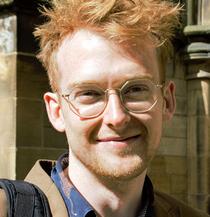
James Dixon, University of Strathclyde, United Kingdom
Dr James Dixon is Senior Lecturer in Transport at the Department of Civil & Environmental Engineering, University of Strathclyde (Glasgow, UK) and Transport Co-Lead of the UK Foreign, Commonwealth & Development Office (FCDO)-funded Climate Compatible Growth (CCG) programme. James' research interests are in transport-energy-environment modelling to support policymaking for sustainable transport transitions in data-poor contexts, including in low- and middle-income countries (LMICs), and in advancing understanding of the potential for e-mobility and renewable energy integration in different mobility contexts around the world. Outside of academia, James has worked as a Civil Servant for UK and Scottish Governments on policy regarding low carbon electricity and transport systems and as an engineer in the aerospace (Rolls-Royce) and nuclear (UK Atomic Energy Authority) industries. James is a chartered engineer with the Institution of Engineering & Technology (IET) and a Fellow of the Higher Education Academy.